



The Grison architect Rudolf Olgiati (1910-1995) created an independent body of work. Most of his buildings were built around the municipality of Flims, with many located on his own property in Flims-Waldhaus, which served as vacation homes. Olgiati was an ardent admirer of Le Corbusier. However, he remained interested in the traditional, rural architecture and culture of Grison throughout his life. His architecture is a unique, abstract combination of his insights from traditional architecture with the modern perspective of Le Corbusier. He was a pioneer of modern, regional architecture in Grisons.
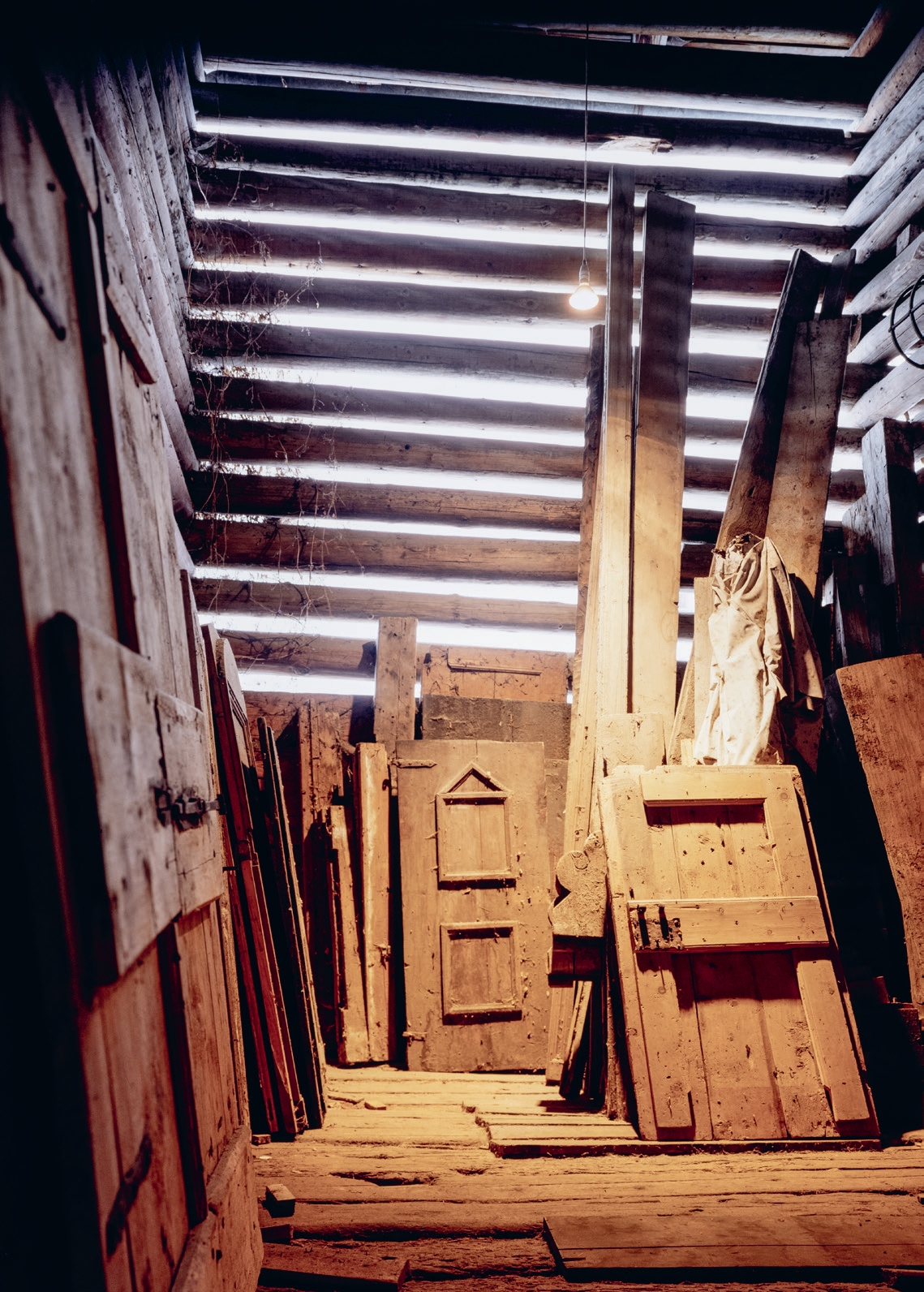
Olgiati developed his own architectural language. He was primarily interested in the visual architectural impact of buildings rather than their actual construction. It was important to him to connect buildings with their context and to give individual elements clear roles within the overall effect. His own analysis of traditional, mostly rural architecture and the modernism of Le Corbusier influenced his architectural thinking and led him to a sculptural approach to architecture. His monumental buildings are usually painted white and have massive, protective outer walls, columns that mark spatial transitions, with historical doors and building elements reintegrated into the buildings. The roof was important to him, because it is visible in the mountains and functions as a fifth façade. His buildings are white, cubic, and appear as independent, pure volumes in the mountain landscape. With his apartment building Las Caglias (1956) in Flims-Waldhaus, he created an early prototype for his buildings.
For architects like Peter Zumthor or Peter Märkli the architectural approach of Olgiati was a touchstone at the beginning of their careers. He taught them and many others to see architecture with open eyes and further develop a contemporary architecture without losing contact with history and local architecture.